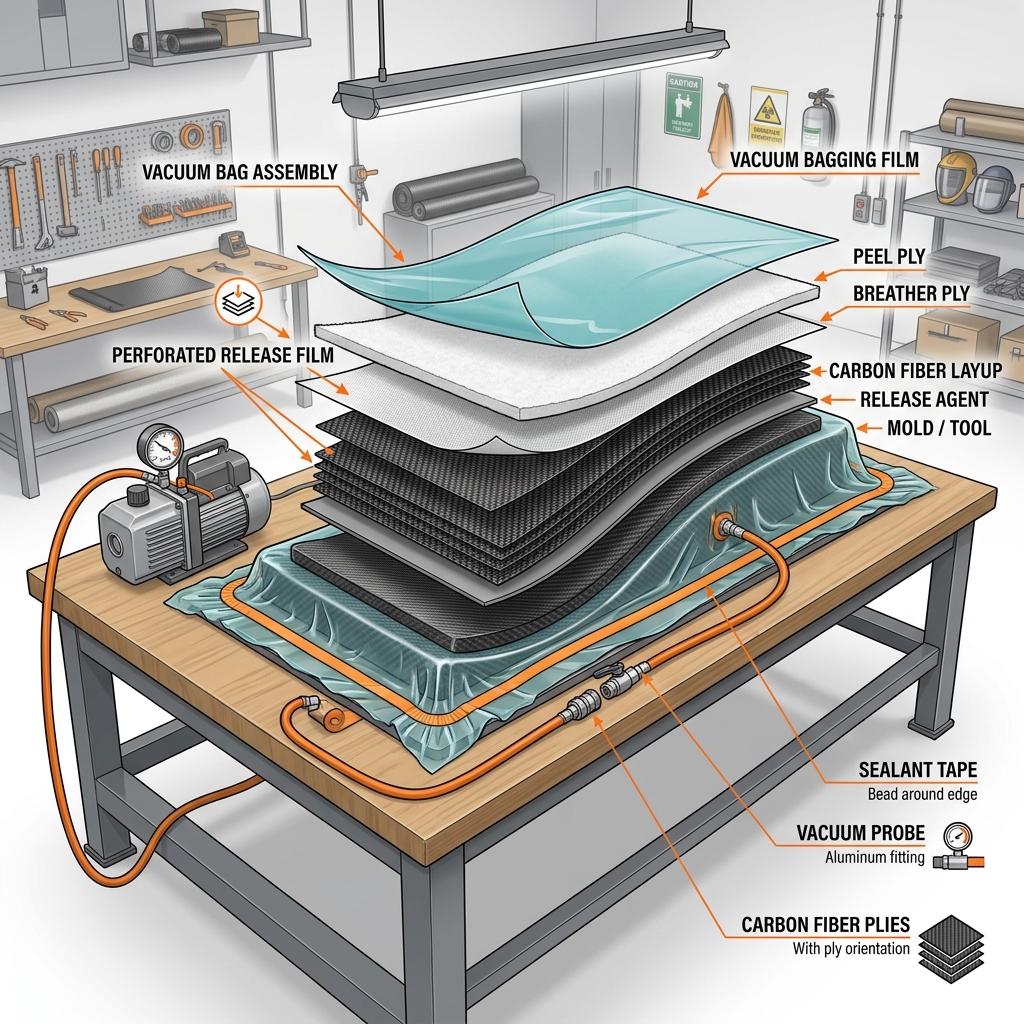
Vacuum bagging is a pressure-based consolidation process that removes trapped air, excess resin, and volatile gases from a wet composite laminate. By sealing the part under an airtight film and drawing a vacuum, atmospheric pressure consolidates the reinforcement fibers, achieving a fiber-to-resin ratio and structural strength that standard manual layups cannot match.
The Consumable Stack Sequence
Getting the sequence of the consumable layers right is critical to prevent the part from permanently bonding to the mold, or trapping pockets of excess resin that weaken the finished component. The stack order is structured as follows:
- Mold Surface**: Cleaned and treated with a high-temperature release agent or wax to prevent bonding.
- Laminate**: Dry or wet-out fabric (carbon/glass) positioned on the tool.
- Peel Ply**: Positioned directly over the wet laminate. Nylon peel ply is standard, leaving a clean, textured bonding surface.
- Release Film**: A perforated plastic film that controls resin bleed while preventing the breather from bonding to the part.
- Breather Cloth**: A synthetic fleece that distributes vacuum pressure evenly across the part and absorbs bled resin.
- Sealant Tape & Bagging Film**: Creates the airtight chamber around the mold flange.
- Vacuum Port**: Connects the bag to the vacuum pump source.
Sizing Your Bag: Folds & Pleats
Unsure which materials match your layout?
Describe your project in plain language. The Guided Buying system will analyze your application and generate a complete project blueprint automatically.
One of the most common mistakes is cutting the bagging film too small. When vacuum is drawn, the film must conform to every corner and indentation of the mold. If the film is tight, it will bridge across corners, causing resin accumulation, thinning, or bag rupture. Always cut your film 30% to 50% larger than the mold surface, and build in plenty of 'pleats' or folds of sealant tape to allow the film to sink into deep cavities.
Troubleshooting Common Process Leaks
Troubleshooting leaks is the most common challenge for beginners. A tiny leak in the sealant tape or around the vacuum port can drop consolidate pressure and introduce dry spots. Always run your pump and perform a 'vacuum drop test' before letting the epoxy cure. Listen closely for high-pitched hissing, and double-check all folds in the sealant tape. If the pump runs continuously without pulling down to at least 25 inHg, check for bridging or pinholes in the film.